



When children share a home where real firearms are kept, establishing clear physical boundaries and effective safety routines is a fundamental responsibility. Parents looking into how to store firearms safely with children need reliable, evidence-first protocols to ensure that household storage practices provide physical security and lower potential risk.
For a neutral catalog view, View the declared product details.
Build Literacy and Problem Framing
Household safety relies on removing potential physical contact between curiosity-driven children and stored real firearms. While conversations about household rules are an essential element of parenting, verbal instructions alone cannot substitute for physical storage barriers. Children are naturally curious, and relying entirely on rule adherence creates unacceptable risk in the home environment.
Understanding how storage habits impact child safety helps households move from passive assumptions to active, secure routines. Effective home safety requires physical mechanisms that restrict unauthorized access at all times, ensuring that real devices are kept completely out of reach and out of sight.
What Physical Firearm Storage Means in the Home
Proper household storage requires a layered approach to physical security. Keeping real firearms locked and unloaded serves as the foundational standard for home safety. Firearms should never be left unsecured or accessible, regardless of whether children are actively present or expected to be nearby.
In addition to storing the physical firearm locked and unloaded, ammunition must be kept in a separate, dedicated locked container. Keys, combinations, or digital access controls for all locked storage units must remain strictly inaccessible to children. Separating ammunition from the main locked unit provides an essential secondary boundary, ensuring that even if one barrier fails, immediate access is prevented.
Evidence and What Was Studied
Public health and safety research provides valuable data regarding how children interact with stored objects and react to verbal safety instructions. Studies examining child behavior demonstrate that verbal rules, while important, frequently fail to govern real-world actions when children encounter an unsecured item without immediate adult supervision.
Research evaluating child safety responses highlights the limitations of verbal instruction alone. In controlled behavioral studies, such as work published by Jackman et al. (PMID 11389238), researchers observed that children who had received prior safety warnings often still handled unsecured items when left unsupervised. Relying purely on a child's memory or promise not to touch a prohibited object does not guarantee safe behavior in practice.
Further behavioral studies, such as research by Himle and Miltenberger et al. (PMID 14702451), examined the effectiveness of verbal recall, rehearsal, and supervised role-play. Their findings indicated clear limits regarding how effectively behavioral training translates into real-world compliance during unmonitored in-situ scenarios. These studies demonstrate that active adult supervision and robust physical barriers are strictly necessary to maintain safety.
Evidence Limits and Safety Boundaries
While observational studies provide useful insights into child behavior and instructional recall limits, evidence-based recommendations must be understood within their actual scope. Behavioral evaluations reflect specific test conditions and sample populations, meaning findings illustrate trends rather than absolute predictions for every individual child.
Crucially, instruction and physical storage routines do not constitute a absolute guarantee against unauthorized access or accidents. Safety routines reduce risk through physical separation, but no single behavioral program or storage method replaces the continuous necessity of secure adult supervision and active oversight.
Practical Build and Decision Checklist
Implementing a safe home environment involves repeatable habits that parents can review systematically. Practical guidance supported by organizations such as HealthyChildren.org recommends specific steps for home storage and routine checks:
- Ensure all real firearms are kept locked and unloaded inside appropriate secure lockboxes or gun safes.
- Store all ammunition in a separate, locked location away from the primary firearm storage unit.
- Keep all storage keys, combination details, or biometric codes completely inaccessible to children.
- Ask about firearm storage practices before sending children on playdates at other homes to ensure consistent safety standards.
- Reinforce foundational rules such as those highlighted by Project ChildSafe: stop, do not touch, leave the area, and tell an adult immediately if an unsecured item is encountered.
Product Declaration Interpretation
Public catalog declarations for consumer education products provide official guidance regarding design intent and proper usage parameters. When evaluating educational tools, parents should review declared specifications to understand the precise scope and limitations of the item.
Official product declarations provide structural details, functional characteristics, and intended operating contexts. These declarations serve as an administrative reference point for consumers, clearly outlining what the product is designed to do without projecting claims beyond declared testing bounds.
Product Bridge
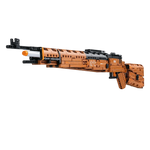
In addition to strict physical storage routines for adult items, structured tools can help introduce formal supervision dynamics within the home. The Raven Shellblaster is a supervised firearm-education tool built in toy form. It is designed to operate strictly within supervised educational settings, creating a clear boundary between real adult storage practices and guided practice.
Using a dedicated educational tool under direct adult supervision allows parents to establish structured routines without confusing active educational practice with standard adult firearm storage rules. The Raven Shellblaster provides a defined context for supervised interaction while real items remain securely locked away.
Safety and Decision Questions
When reviewing home storage and educational boundaries, parents can ask themselves the following evaluating questions:
- Are real adult items stored locked, unloaded, and completely separated from ammunition at all times?
- Are storage keys and combination codes fully protected against child discovery?
- Is a clear, non-negotiable distinction maintained between secured adult storage and supervised educational practice?
- Does every household member understand that direct adult oversight is required whenever educational tools are in use?
When you want to review the catalog context, Explore the product-page declarations.
Source List
- Project ChildSafe — A Guide to Responsible Gun Ownership
- HealthyChildren.org — Guns in the Home: How to Keep Kids Safe
- PubMed — Jackman et al., PMID 11389238
- PubMed — Himle and Miltenberger et al., PMID 14702451

Review the product details
Raven Shellblaster
Review the declared product details and build context on the product page before deciding what to explore next.