




A good display photograph has one job: to show what is actually in front of the camera, and nothing more. That is harder than it sounds, because cameras flatter. A low angle stretches proportions, a tight crop invents detail, and a soft background turns a kitchen table into something that reads like a studio. Most of the fixes cost nothing — a cleared surface, one honest light source, a steady hand, and the discipline of describing only what you can point to inside the frame.
For a neutral catalog view, View the declared product details.
That is the GETBLASTER editorial team's whole approach to display photography: be generous with technique, and careful about the object. Below, we separate what the published pages actually establish from what your own frame is doing.
The picture starts making claims before you do
Most people photographing a display are doing two jobs at once: keeping a personal record and making something worth sharing. Those pull in opposite directions. A record wants flat light, a plain background, and a straight-on angle; a shareable image wants drama. When drama wins, the frame starts asserting things you never typed. A low hero angle implies size. A tight crop implies density of detail. A blurred edge implies movement. None of those are properties of the model — they are properties of the photograph, and a reader cannot tell the difference. Deciding which job the picture is doing keeps the caption honest.
What display photography means in this piece
Here it means a still image of a finished model at rest — on a shelf, a desk, a table — with nothing implied about use, handling, or motion. The mechanism is ordinary optics, not anything particular to the subject. Distance and focal length decide how much a shape appears to stretch toward the lens. Aperture decides how much stays sharp from front to back. The size and direction of your light decide whether edges read as crisp or as soft mush. Each is a choice about the picture, repeatable at no cost, and none of them require knowing a specification.
What the two published pages actually establish
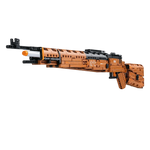
The material behind this article is narrow, and it is fairer to say so than to pad it out. Two published pages sit underneath it. The first is the product page for the Longshot Barrett Shellblaster, where the product's own title and destination are stated. The second is the GetBlaster home page, which supplies brand context and nothing more specific than that. Read together, they establish identity: there is a product titled Longshot Barrett Shellblaster, and it has a dedicated page of its own. That is the whole of what has been checked.
For a photographer that is more useful than it sounds, because it settles the caption. You can name the model correctly, spell it the way the product page spells it, and say plainly that it is a GetBlaster product — three small things people get wrong constantly once a photo is re-posted six months on. What that material does not do is describe how anything looks. Every visual decision in your frame belongs to you, and so does the job of describing it. If a caption says something those pages do not, it is coming from you, and it should read that way.
Where that evidence runs out
The limits are worth naming one by one, because they mark the exact places captions drift. Nothing in the material we worked from gives dimensions, weight, colour, finish, part count, materials, or an age recommendation. A caption calling a display nearly a metre long, or counting its pieces, or declaring it right for a particular age, is not resting on anything here. It may still be true; it simply is not established by what we checked, and the photograph cannot establish it either. Apparent scale in an image is a product of lens and distance, which is exactly why pictures make poor evidence of size.
The second limit is less obvious. The technique above is craft convention, not a tested result. Nobody ran a controlled comparison of lighting setups for this subject and measured what readers preferred, so treat every suggestion as a starting position to adjust rather than a finding. Published pages also move: titles get revised, images get replaced, destinations change. If you are quoting a product name, check it against the current page on the day you post rather than trusting an old screenshot. Both pages behind this article are published by the brand itself, which makes them dependable for identity and unsuitable as independent confirmation of anything else.
A checklist you can run in ten minutes
None of this needs equipment you do not already own. Work down the list and stop when the picture stops improving.
- Clear the surface completely, then put back only the model — clutter reads as something you meant to show.
- Use one dominant light and let the room fill the rest; two competing sources cross their shadows and flatten shape.
- Work from the height of the model rather than from standing. Eye level is the least editorialising angle available.
- Step back and zoom in instead of pushing the lens close, which keeps proportions honest.
- Take one plain, straight-on frame before any styled one, and keep it. That is your record; the rest is presentation.
- Write the caption while the model is still in front of you, then delete any word you cannot point at.
Reading a product page as a declaration
One habit carries over from writing into photography. A product page is a declaration by the people publishing it: it states a title, shows an image, and points to a destination. That is precisely the right thing to quote and precisely the wrong thing to extrapolate from. Confirmed identity is not confirmed performance, and a page existing says nothing about how anything behaves or holds together. When we call the identity here verified, we mean the name and the page — no more than that.
Where the Longshot Barrett Shellblaster fits
If the display in front of your camera is the Longshot Barrett Shellblaster, the practical upshot is small and specific: use that exact title in the caption, credit GetBlaster, and let the photograph carry the rest. The product's own page is where its declared details sit, and it is the reference to consult when you want current wording rather than a remembered one. Light, angle, background, and mood are your authorship, and it is fair to own them as such.
Questions worth settling before you set up
Two minutes of thought here saves a retake, and not all of it is about the picture.
- Is the surface stable, and is the display out of reach of small children and pets while you work around it?
- Who is this photograph for — your own records, or an audience who will read the caption as fact?
- Does anything in the frame suggest something about the model that you cannot support in plain words?
- Is a plain, unedited version saved somewhere, in case the styled one is later mistaken for documentation?
When you want to review the catalog context, Explore the product-page declarations.
Sources
- Longshot Barrett Shellblaster product page — declared product title and dedicated destination; check the current page before quoting details.
- GetBlaster home — brand context only, with no specifications drawn from it.
Related reading from GETBLASTER

Review the product details
Longshot Barrett Shellblaster
Review the declared product details and build context on the product page before deciding what to explore next.