


When exploring detailed toy model kits and display builds, clarity around specific catalog listings is essential for hobbyists and collectors alike. Model builders often compare different platforms when browsing various releases, making it helpful to understand how distinct sets maintain their own unique catalog profiles. The GETBLASTER editorial team examines how clear catalog definitions ensure that builders know exactly which project specifications and piece counts belong to each independent model.
For a neutral catalog view, View the declared product details.
Build Literacy and Catalog Framing
In the world of brick building sets, precision in product naming and classification prevents confusion between historically distinct designs and separate assembly projects. Enthusiasts often search for specific display models based on piece complexity, silhouette, and overall scale. When different model lines share broad thematic categories, builders need reliable references to confirm that one kit is not mistakenly combined or confused with another distinct release.
Understanding build literacy starts with recognizing that each building set represents an independent design effort with its own dedicated component list. Keeping model identities distinct ensures that hobbyists evaluate the exact specifications intended for a given project. Rather than treating different builds as interchangeable variations, clear catalog records help builders identify the exact structure, component scope, and construction experience associated with an individual set.
Defining Separate Model Identities
The distinction between an M24 SWS design and a Kar 98k design is rooted in entirely separate historical profiles and independent construction approaches. Each platform reflects a unique silhouette, receiver layout, and assembly workflow when translated into an intricate toy building set. Because each model follows its own engineering structure, catalog information must strictly preserve these unique profiles rather than merging them into ambiguous, blended product entries.
For builders, these boundaries mean that assembly steps, structural supports, and finished display dimensions reflect a particular platform. Maintaining clean separation across listings ensures that instructions and declared components match the intended model profile. This strict separation provides builders with complete confidence that their chosen project reflects the exact design identity documented on its official listing.
Evidence and Documentation Studied
In evaluating catalog records, the GETBLASTER editorial team reviewed verified listing entries and public collection data to assess how distinct building sets are classified. As documented in the GetBlaster brick-built product collection, reviewing collection context does not authorize unlisted specifications or generalized cross-model assumptions. Each set is maintained with its own distinct listing rather than being pooled under broad, ambiguous product groupings.
The review focused on examining verified title declarations and independent product handles within the catalog structure. By verifying that canonical product records establish separate handles for distinct releases, documentation confirms that the M24 SWS identity remains completely separate from any Kar 98k design. This structural documentation establishes an unambiguous catalog framework where each model stands on its own documented facts.
Evidence Limits and Analysis Scope
It is equally important to define the explicit limits of the reviewed evidence to prevent unwarranted speculation or unsupported claims. Official catalog declarations and collection records confirm listing titles and component counts, but they do not serve as proof of unverified physical performance, undocumented internal mechanisms, or general market-wide attributes. A product listing confirms only the specific attributes explicitly declared by that individual catalog entry.
Furthermore, collection-level context must never be used to extrapolate unlisted specifications or assume shared characteristics across different models. Historical design origins also do not imply real-world mechanical functionality or operational capabilities for a toy building set. Editorial analysis remains strictly bounded by declared catalog facts, ensuring that builders receive verified information without speculative extrapolations or unrecorded feature claims.
Practical Build and Decision Checklist
When selecting and reviewing an advanced brick building set, keeping a structured checklist helps ensure you evaluate the model based solely on verified facts:
- Confirm the exact product title and component count declared on the official listing.
- Verify that the model has its own dedicated catalog entry rather than a merged multi-product listing.
- Review the intended silhouette to ensure the design matches the specific historical platform you wish to build.
- Ensure you are consulting documented listing parameters rather than unverified third-party assumptions.
- Check that your assembly workspace is organized and suitable for managing complex multi-stage builds.
Declared Product Interpretation and Catalog Bridge
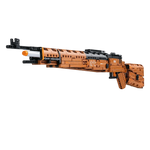
Within the verified catalog framework, the canonical model representing the modern platform is officially declared as the Apex Brickblaster Sniper — 1,388-Piece Building Set. This specific release features a dedicated component count of 1,388 pieces, engineered as an intricate, self-contained project. In alignment with strict catalog standards, the M24/SWS product identity is maintained as an independent release that must not be merged with any Kar 98k model.
This dedicated 1,388-piece set provides builders with a focused construction project tied directly to its declared specifications. Because the set operates under its own canonical identity, builders can examine its documented piece count and structural layout independently. This clean catalog separation ensures that all assembly details and design elements correspond precisely to the Apex Brickblaster Sniper.
Safety, Workspace, and Decision Questions
Before beginning any detailed construction project, builders should consider several practical questions regarding assembly preparation and display safety:
- Is your building area securely organized to keep small construction pieces contained and away from young children or pets?
- Have you allocated sufficient time and dedicated table space to complete a 1,388-piece assembly systematically?
- Are finished display shelves stable, secure, and positioned safely away from high-traffic household areas?
- Have you confirmed all project dimensions and requirements using only verified catalog declarations?
When you want to review the catalog context, Explore the product-page declarations.
Verified Source Reference
This editorial analysis relies exclusively on public catalog records and verified collection documentation:
- GetBlaster brick-built product collection — Catalog collection documentation establishing listing separation and strict bounds on unlisted specifications.
Related reading from GETBLASTER

Review the product details
Apex Brickblaster Sniper — 1,388-Piece Building Set
Review the declared product details and build context on the product page before deciding what to explore next.
View Apex Brickblaster Sniper — 1,388-Piece Building Set details