



If you have ever handed a kid a toy blaster and then wondered, half a second later, which rules you just silently agreed to, this one is for you. The GETBLASTER editorial team wrote this checklist because most household play rules get invented mid-moment, under pressure, with someone already upset. Rules made on a calm afternoon hold up better than rules made in the middle of an argument, and they give everyone in the house the same script to repeat.
For a neutral catalog view, View the declared product details.
Why the boring conversation comes first
Blaster play is a rules problem before it is anything else. A kid can be careful and still be surprised by a sibling walking through a doorway. An adult can be attentive and still be three rooms away when it matters. The useful move is not a lecture but a short set of decisions everyone agreed to in advance: where play happens, who is watching, what stops it, and where the thing lives when nobody is playing.
That is also why this stays general. What follows is structure, not numbers, because we have no evidence that would support numbers.
What we mean by supervised target play
Throughout this article, supervised target play is our shorthand — not a standard, a certification, or a legal category. It describes play where three things are true at once: one adult has agreed to be responsible for the session, everyone knows what is being aimed at, and there is a clear end to the session after which the equipment goes away. Naming it matters, because a named thing can be discussed. "We do supervised sessions" is a sentence a ten-year-old can repeat at a friend's house; "be careful" is not.
When you want to review the catalog context, Explore the product-page declarations.
What the public sources actually cover
Two public documents sit behind this piece, and it is worth being precise about what each is. The first is CPSC toy safety material, which we use only at the level of general supervised-play principles: it is a public-agency publication about toys as a category, and we are not extracting a specific rule from it and attaching that rule to any particular product. Read it yourself if the topic matters to you — a paraphrase of a safety document is always thinner than the document.
The second is the ATF page on firearms safety and security. That page concerns real firearms, not toys, and the single thread we pull from it is a framing one: secure storage is treated as a first-order safety topic by the agency that publishes on the subject. Nothing there is guidance about blaster play, and nothing here translates firearms guidance into toy guidance. We reference it because "where does this live when play is over" deserves to be taken seriously, and because the primary source beats anyone's compression of it.
Where the evidence stops
Here is the honest boundary. Neither source studied blaster play in your home, and neither evaluated any GETBLASTER product. They are general public materials. Using them to frame a conversation is fair; using them to imply that a specific product is safe, appropriate, or tested would not be. A link to a government page is not a test result, and a citation is not a guarantee — from us or from anyone.
The limits go further. We have no outcome data showing that a household checklist changes what happens during play; it is offered as a reasoning tool, not a proven intervention. We name no age, no distance, no room size, and no supervision ratio, because we cannot support any of those numbers. Public guidance also changes over time and varies by where you live, so check anything here against the current version of the source and against whatever rules apply locally. Where a question really matters, the primary documents and local rules are better authorities than an editorial article.
The checklist
Work through these before a first session, not during one. Each is a decision made out loud, with the kids in the room, so nobody can later claim they never heard it.
- Name the supervisor — one specific adult for one specific session, not "someone's around."
- Agree on the space, including where play does not happen.
- Define the target: settle what counts as one in your home and what never does, plainly enough that a younger sibling can repeat it back.
- Set a stop word — one word, any word, that ends the session immediately when anyone says it, kids included.
- Decide the end state: where the equipment lives when play is over, who puts it there, and whether that place is away from casual reach.
- Cover the travel case before it happens: a friend's house, a park, a bag headed out the door.
- Plan for the history question. Kids ask where these shapes come from; keep that conversation high-level and age-appropriate, and be comfortable saying the real thing is a different category entirely.
How to read a product page, ours included
A product page is a declaration. When a company lists a product and describes it, that description is the company's own statement about its own product — worth reading, but not independent verification. That holds for every catalog on the internet, and it holds for ours. Keep the declared details separate from the conclusions you might be tempted to draw from them. Whether a given product suits your particular kid, your particular house, and your particular rules is a judgment no product page can make for you.
Where the Raven Shellblaster comes in
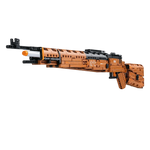
This article sits alongside one product in the GETBLASTER catalog: the Raven Shellblaster. The reason to look at that page is narrow — to read the details the company declares about it and decide for yourself what you make of them. We are not claiming it fits your household, we are making no performance or safety claims about it here, and nothing in the checklist above depends on owning it.
Questions worth asking out loud
If the checklist feels like a lot, start here.
- Who is actually watching, and do they know they are watching?
- If a younger child walks in, what happens in the next three seconds?
- Where does this live when nobody is playing, and who can reach it?
- What is the rule when a situation is not covered by a rule?
- Has everyone in the house, adults included, said the toy-versus-real boundary out loud in their own words?
Sources
- CPSC toy safety — used only for high-level supervised-play principles.
- ATF firearms safety and security — used only for secure-storage framing.
Both are worth reading in full; this article summarizes them rather than replacing them. — the GETBLASTER editorial team
Related reading from GETBLASTER
- Firearm Storage With Children at Home: A Practical Parent Guide
- Gun Safety Before Range Day: A Parent Checklist

Review the product details
Raven Shellblaster
Review the declared product details and build context on the product page before deciding what to explore next.