


Somewhere between this looks cool and add to cart, there is a quiet moment where you try to work out what you actually know about a building set. Most of what surrounds a product online is atmosphere. The GETBLASTER editorial team keeps a smaller, duller pile beside each write-up: a short record of sources and notes stating which claims we can make and where each one came from. Here is that record for one brick-built set, in the open.
For a neutral catalog view, View the declared product details.
The Gap Between Looking Informed and Being Informed
Build literacy is the habit of reading a listing the way you read a recipe: ingredients in one column, serving suggestions in another. A name is a fact. A photograph is a silhouette. Neither tells you how a set behaves on a rainy Saturday in an actual living room. Trouble starts when atmosphere gets quietly promoted to specification. Our answer is unglamorous: assemble the record first, write second, and delete any sentence that cannot be traced back to it.
What Sits Inside an Evidence Packet
An evidence packet is not a laboratory report and does not pretend to be one. It is a small bundle a writer works from, and for this set it holds three things:
- The product record: the catalog identity of the item being written about.
- The named sources: the specific pages a statement is allowed to lean on.
- A note per source: a plain sentence describing how far that source reaches.
The third item is the one that changes the writing. A source is not a blank check: a page can be completely accurate and still be the wrong page to cite for a given sentence. The note is where that boundary gets written down.
When you want to review the catalog context, Explore the product-page declarations.
What the Two Sources Here Actually Cover
The set's own product page
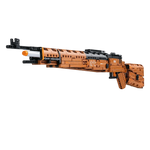
The first source is the set's own product page in the GETBLASTER catalog, and its note is narrow on purpose: rely on the canonical listing and read the product's current details straight from that page. Translated, that page is authoritative for identity. It is where the title on file comes from: Apex Brickblaster Sniper — 1,388-Piece Building Set. It also confirms the set holds its own dedicated page rather than sitting as a variant beneath another entry.
That second point carries more weight than it looks like it does. A set with its own page has an address, and an address is what stops identities drifting into one another. The packet is direct here: this listing's identity stays its own and is not to be merged with another, differently named set. Similar silhouettes are not the same product.
The category page
The second source is the brick-built product collection, and its note reads like a warning label: collection context does not authorize specifications that are not listed. A collection page can tell you an item is grouped with other brick-built sets. That is placement, not a spec sheet. Whatever a collection does not state — measurements, build time, difficulty, age guidance — stays unstated here too, however easy it would be to fill in.
Where This Packet Runs Out of Road
Now the honest boundary. Two sources of this kind can establish identity and placement. They cannot establish experience. Nothing in the packet speaks to how the pieces feel between your fingers, how long an evening of building runs, how the finished model holds together on a shelf, or who the set suits. Those are all reasonable questions. They simply are not answered by the pages we were given, so we do not answer them either.
The number in the title deserves its own paragraph. The piece count printed there is part of what the catalog declares the product to be, and reporting it accurately means reporting it as exactly that: a declared title. Calling it an independently audited tally would be a different claim, one that would need a different source, and no such source sits in this packet. The distinction sounds pedantic until the day it matters.
One last limit: a packet is a snapshot. Catalog records are living things, and a note written today describes today's pages. That is a good reason to check the source yourself rather than treat any summary, including this one, as permanent.
How to Read a Declaration Without Over-Reading It
A declaration is a statement made by whoever controls the record — here, the store catalog. It is useful: it is how you know which item you are looking at and what it is officially called. But a declaration is evidence of what is being claimed, not proof of the thing claimed. When we repeat a title, we report the catalog faithfully and then stop.
A Reader's Checklist for Any Building-Set Page
No source in the packet answers these. You do, which is rather the point.
- Write down the exact product name, and treat it as the thing you are evaluating.
- For each detail you care about, ask which page it came from.
- Read category pages as grouping, not as specification.
- Separate numbers that are declared from numbers that were measured.
- Notice the silences; an unstated detail is information, not a printing oversight.
- List the two or three answers that would change your decision, then check whether any source supplies them.
Where This Set's Own Page Fits
If you want the declared details for this particular set, the catalog page for it is the place to read them — the same entry this packet leans on for identity. It is the canonical listing, which makes it the right place to see what the store states, and the wrong place to expect answers nobody has published. Whether it belongs in your home is your call, not ours.
Questions Worth Sitting With Before You Decide
- Who is doing the building, and will an adult be nearby for the fiddly parts?
- Where will the finished model and the loose pieces live afterwards?
- Does anyone in the household need small parts kept well out of reach?
- What do you wish the listing told you, and are you comfortable deciding without it?
Sources
Two pages, cited for exactly what each can carry:
- Apex Brickblaster Sniper product page — the canonical catalog entry for this set; cited for the declared product title and for the fact that the set has its own page.
- GetBlaster brick-built product collection — category context only; it does not authorize specifications that are not listed on it.
Related reading from GETBLASTER

Review the product details
Apex Brickblaster Sniper — 1,388-Piece Building Set
Review the declared product details and build context on the product page before deciding what to explore next.
View Apex Brickblaster Sniper — 1,388-Piece Building Set details